Sickle Cell Across the Lifespan

Sickle cell is not a moment in time. It is a lifelong condition that shapes health, education, work, and daily life from birth through adulthood.

While it is often discussed as a medical issue, the realities of sickle cell reach far beyond the doctor’s office. Children miss school. Families navigate repeated hospitalizations. Young adults face gaps in care during critical transitions. Adults experience disruptions to employment, income, and long-term stability. These challenges compound over time, especially when systems fail to coordinate support.

The data below highlights what living with sickle cell looks like across the lifespan. Each section reflects not just health outcomes, but the broader impact on quality of life, opportunity, and well-being.

At SickleWell, we use this data to guide action. Our work is grounded in the belief that people living with sickle cell deserve consistent, coordinated support at every stage of life — not just during moments of crisis.
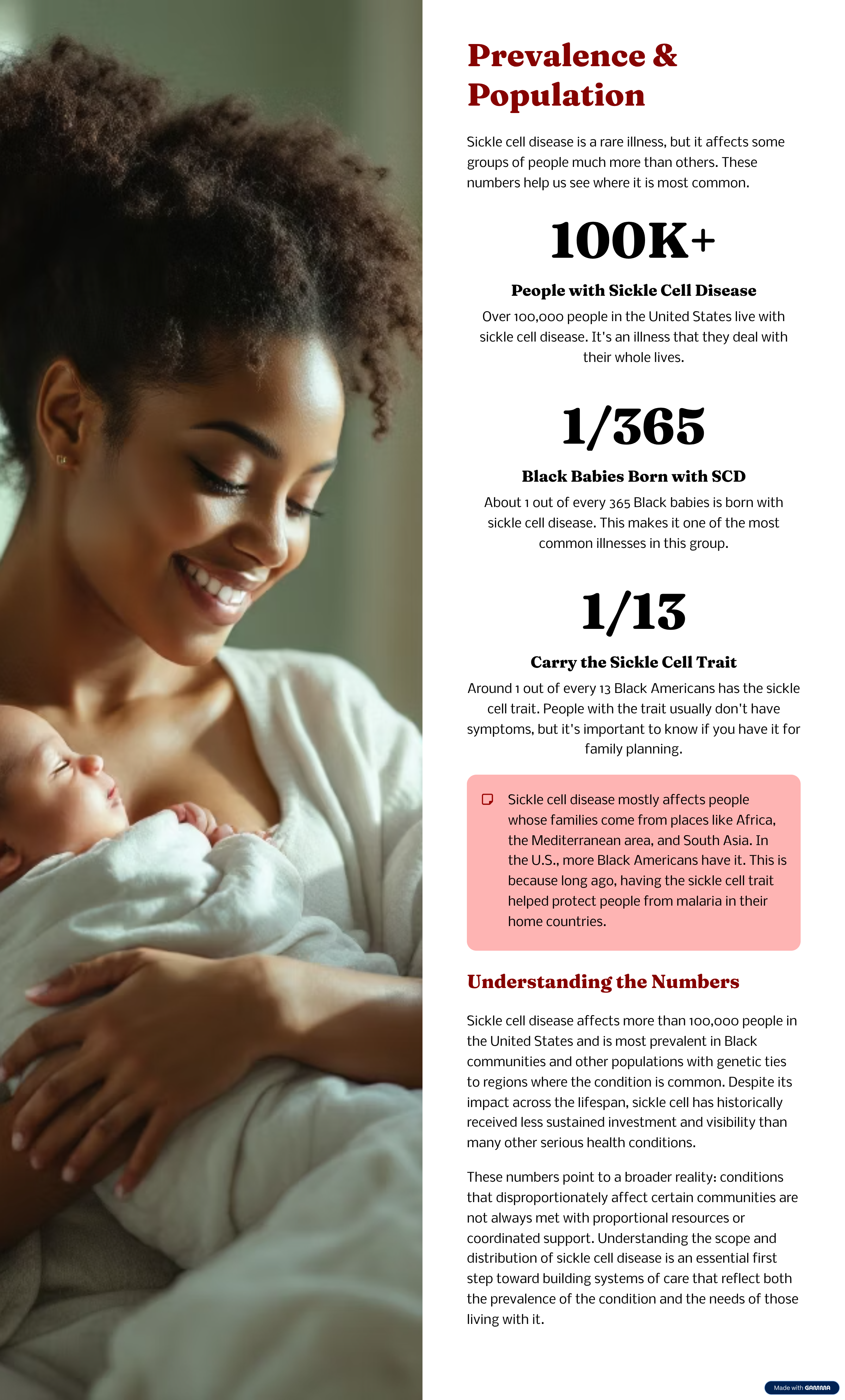
An infographic titled 'Prevalence & Population' shows statistics about sickle cell disease, featuring a woman with natural curly hair holding a baby, both smiling. The infographic highlights that over 100,000 people in the U.S. have sickle cell disease, 1 in 365 Black babies are born with it, and 1 in 13 Black Americans carry the sickle cell trait. It explains how the disease affects predominantly African, Mediterranean, and South Asian populations, and provides context for understanding these numbers.
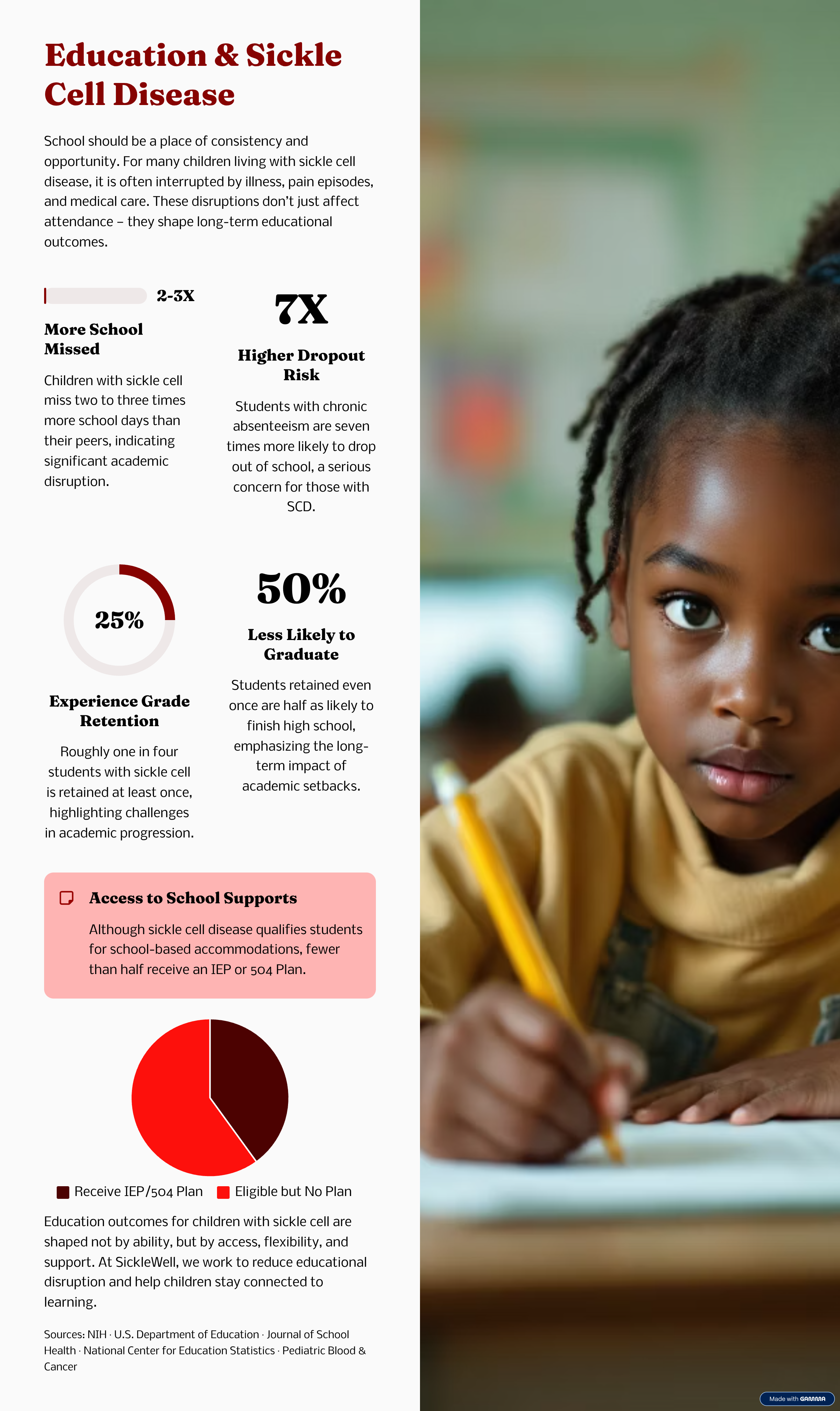
Infographic about the impact of sickle cell disease on education, showing statistics on missed school days, dropout risk, graduation likelihood, and access to school supports, with a photo of a young girl writing at a desk.
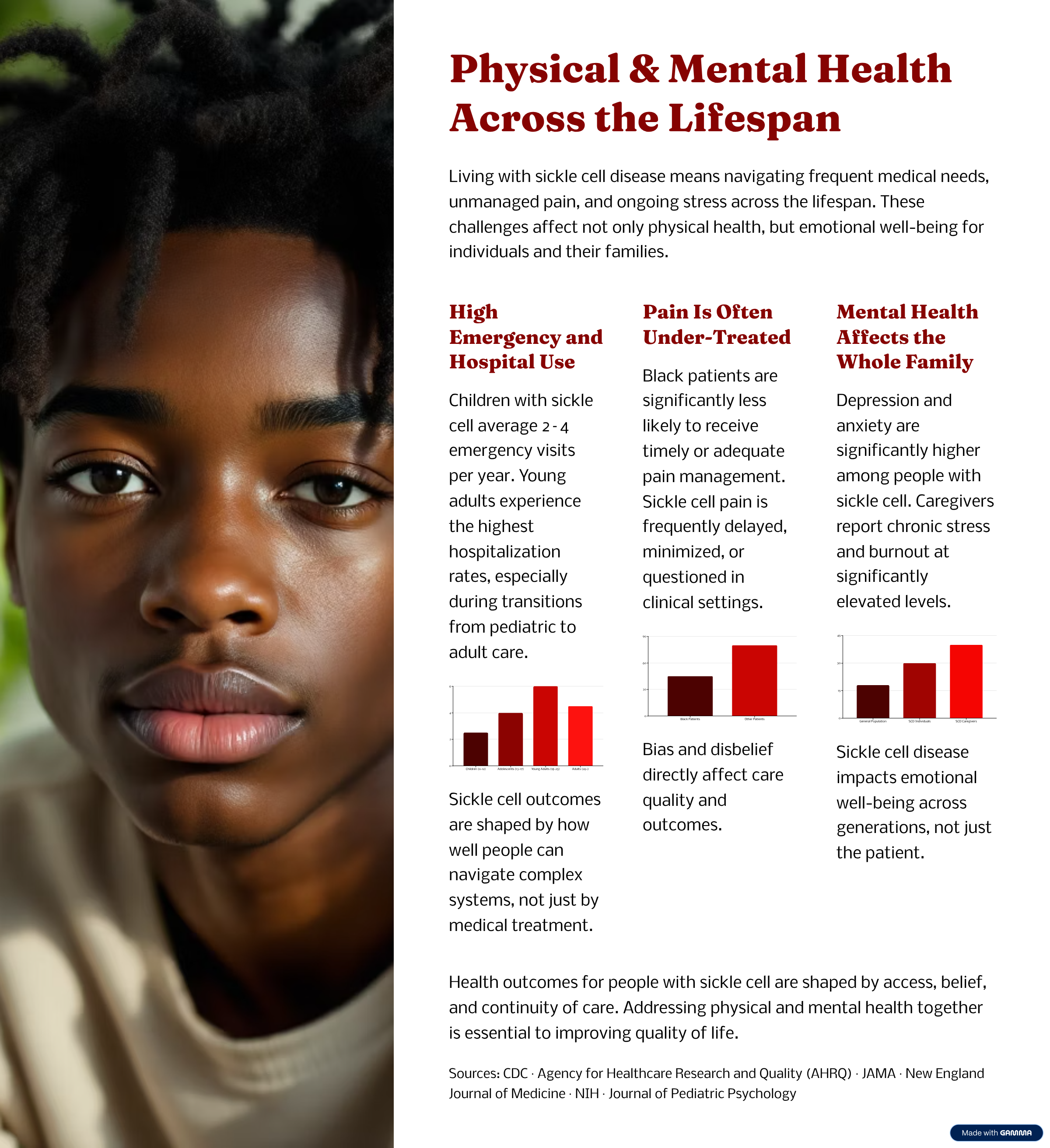
A young person with dark skin and natural hair looking directly at the camera, next to an informational poster about physical and mental health across the lifespan, focusing on sickle cell disease.
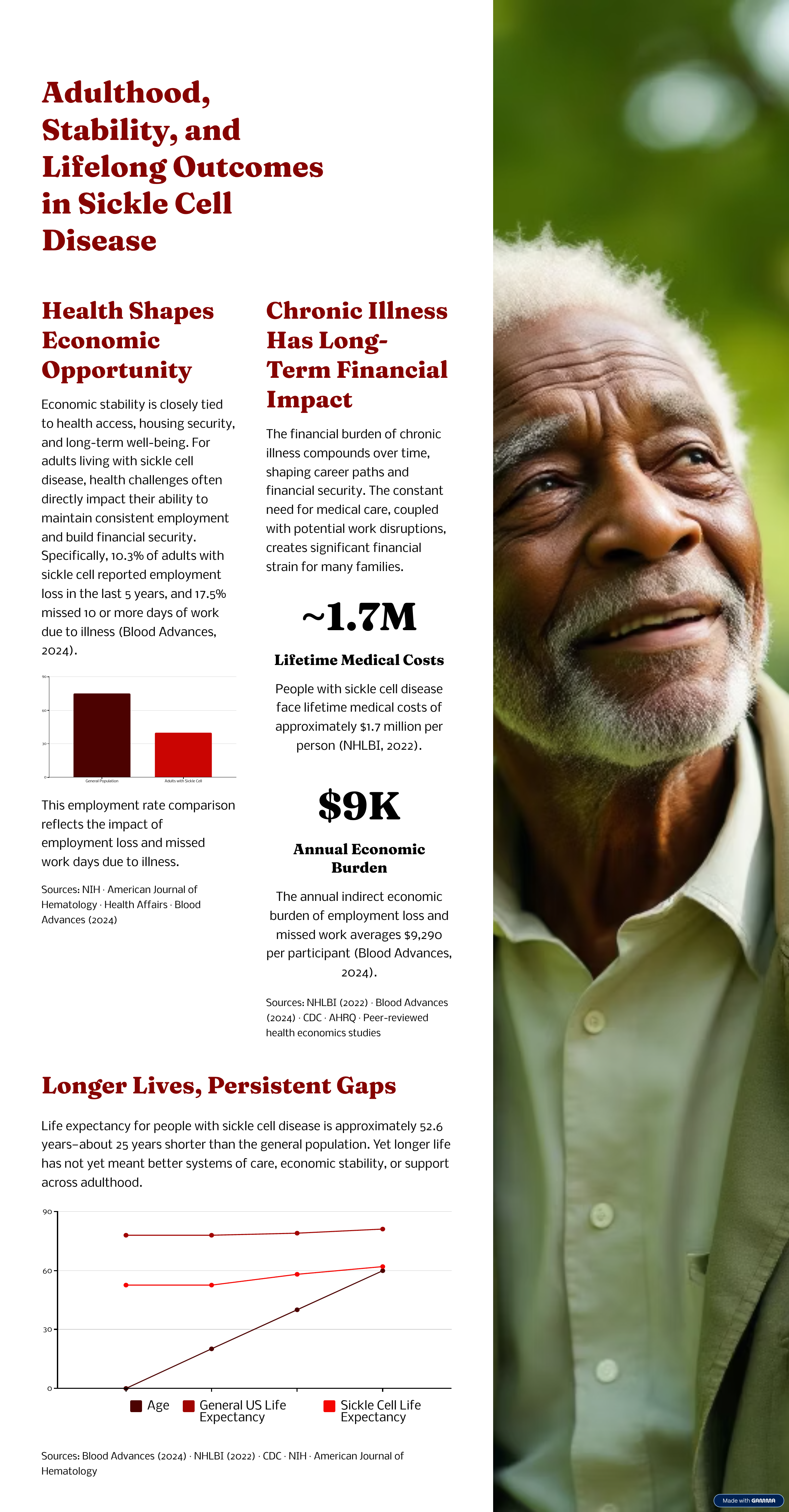
An infographic page titled 'Adulthood, Stability, and Lifelong Outcomes in Sickle Cell Disease' with sections discussing health shapes, economic opportunity, chronic illness impact, lifetime medical costs, economic burden, and benefits of longer lives and persistent gaps. The right side features a close-up photo of an elderly man with gray hair, a beard, and a light-colored shirt, smiling outdoors with a blurred green background.